
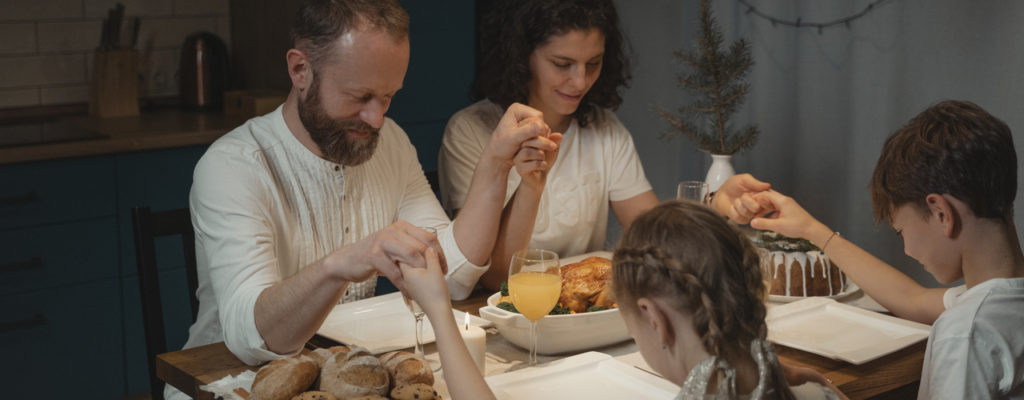
Intentional acts of love and order are foundational to forming our souls, which, directed by the Holy Spirit, is the only way for God’s goodness and discipline to grow.
The second semester of the year typically starts off strong. Think about it. You know what you are doing. You may (or may not) have a rhythm established. Your children know what is expected in class. They work to achieve a level of excellence that is pleasing to God (Col. 3:17, 23) and honors their parents (Ex. 2:20). But a few weeks in something happens. The steam runs out. Everyone gets tired. Tired of the fight that is starting (or continuing). The fight to get out of bed, the fight to go to sleep at a reasonable time, the fight to make lunches that are kid-approved, the fight to get the homework done (much less to get it done with joy and gladness), the fight to get in all of the after-school activities and attempt dinner as a family one or two nights per week. The fight is real in most homes. But it doesn’t have to be. Preparation, flexibility, and consistency are key to a successful second semester, which is often more difficult than the first. The time of review material is finished. We are heavy in the new content. This means that more practice is necessary. Winter sports are closing and spring sports are about to begin. Dance is gearing up, and music lessons never really stopped. Teach my child to do chores? When?! There simply isn’t enough time for the basic things, much less extras in life. The rhythm breaks down, and life becomes chaotic again.
This isn’t the life we are called to. We are called to a life lived like Jesus: a life of intentionality, love, service, fortitude, joy, peace, and solitude. In this introductory blog, I hope to encourage you to consider the life you are living and make simple adjustments to reorder your day with a rhythm.
In Genesis 1, God needed only six days to prepare all of His creation, which he spoke into existence: “There was evening and there was morning…and God saw that [His creation] was very good.” If you are not familiar with Genesis 1, take a minute to read it.
In this passage, God is showing us three key points: (1) our words have power, (2) creation is good, and (3) God gave order to His world. While our focus is on the order God created in the world, let’s briefly touch on the first two points.
First, our words have power. The language, “And God said” is used eight times in Genesis 1 immediately before each part of our world is created ex nihilo (out of nothing). As Christians, we possess God’s power. The Holy Spirit leads, guides, and directs us. Jesus’ apostles are seen healing the sick, casting out demons, and performing miracles by their words alone (Acts 4:30, Luke 9:6, Mark 6:13). We still see this today. James 5:16 tells us, “Therefore, confess our sins to one another, and pray for one another so that you may be healed. The effective prayer of the righteous man can accomplish much.” Our words matter. Consider this as you plan the rhythms and liturgies of your day in preparation, flexibility, and consistency.
Second, God’s creation was good. Everything that He created was good. It wasn’t mediocre, bad, or just all right. It was good. Remember, your intentional acts of love and order are foundational for goodness and discipline to grow. Where there is discipline, sin is less. Where there is no structure, order, or discipline, sin prevails. God’s creation was good. Every part of it. He spoke it and it was good.
This thought brings us to our final point – just as God gave order to our world, we should give order to our lives. This is done through ordered language and ordered actions. So, what can we say and do to order our lives around God’s will and not our own? Preparation paired with flexibility and consistency are key.
Last night I cooked soup. I have cooked this delicious vegetable soup a hundred times. It calls for the same basic ingredients: hamburger meat, petite diced tomatoes, tomato juice, beef broth, carrots, celery, onions, beans, and mushrooms. Cook the meat, dice the vegetables, then dump it all in the pressure cooker. It’s ready in minutes and feeds our family of six for 2-3 meals. If I am not prepared with the right ingredients or cooking equipment, it doesn’t work. If we don’t have bowls or spoons, it will be difficult to eat the soup. (Unless we act like the Beast and slurp it, but even Belle taught him better.) Being prepared is essential to enjoying the day.
There was evening and there was morning…the next day. And in it, God saw that His creation was good. Moments of magic happen in the evening and the morning as we prepare for the next 12 hours. We leave our home at 6:45 AM. Therefore, with four children, three of which are 10 and under, our day needs to be finished by 6:45 PM. This means folders must be checked, homework completed, clothes ready for the next day, dinner eaten, and water bottles filled. I must know what I am preparing for breakfast (if not already cooked), what I am packing for lunch (if not already packed), and what I am making for dinner the next day. In the most glorious of mornings, I prep breakfast and pack lunches for the next day while cooking dinner the night before. This makes for a consistent, predictable evening and a magical morning. OK, maybe not magical, but it at least minimizes the chances of starting our day hurried, scattered, and with tears. Instead, we all know what to expect and are inclined to follow through with it because it has become a habit for us. Take this morning for example. In the chart below you can see what was on my schedule and what really happened.
My predicted schedule
4:30: wake, make coffee, dress for exercising while coffee makes
4:40: drink coffee and read Bible
4:55: indoor bike and read my child’s independent reader book so that I can discuss it with him
5:40: dress for the day
6:00: prep breakfast and check behind my kids to ensure they have all of their items
6:30: eat and pray together
6:45: leave for school
NOTE: What is missing from my schedule? Greet my husband (and children) when they wake. It seems simple, but this important point will come up later.
What really happened
4:30: turned off alarm
5:05: finally got up (no time to exercise now), made coffee and lunches (didn’t do that the night before)
5:15: began to read my Bible, but chose to pray instead (anxiousness was very real this morning)
5:45: dressed for the day
6:00: cooked eggs to go with the sausage and bacon that I cooked Saturday; confirmed kids had water in their water bottles and all items packed
6:30: ate breakfast together as a family (we got one thing right!)
6:40: began to move to the car only to find out that all four new spill-proof, leak-proof water bottles were not, in fact, spill-proof; all water bottles had to be changed to old ones (Thank God I hadn’t given them away!)
6:47: pray and leave for school!
Ok, that’s a lot. I hope it gave you some hope. Sure, I am an over-achiever. I believe that I can accomplish more than I actually can. Regardless, I was as prepared as I could be – minus not having lunches pre-packed.
This leads me to our second point – be flexible (and nonreactive)! Things are going to happen. If you are prepared, you are ready to not react negatively when something messes up your day. When I made the decision to hit the snooze button, I instantly knew it meant sacrificing something from my planned morning schedule. I could have sacrificed time with God and chosen to exercise, but I didn’t. I want to make the most important thing the important thing. I have the afternoon free, so I can get in my exercise with my children then. However, this meant sacrificing not reading the next chapter in my 4th grader’s book. We will choose for this to be our family reading tonight to make up for the lost time. Regardless, you see what happened. Being prepared meant I had to be flexible. Flexible with exercise, time with God, reading, and water bottles. Could I have squeezed it all in after hitting snooze? Maybe. But the hurry just isn’t worth it.
There have been many days when I began to cook my mother’s vegetable soup, only to see that I didn’t have celery and onions. Or I was out of tomato juice. Maybe I didn’t have hamburger meat either. Because of this lack of preparedness, I renamed it “Dump Soup.” My goal is to make vegetable soup, but I end up dumping whatever I have in it. Flexibility is key – even for good soup! Flexibility is best achieved when preparedness has happened. Be prepared. Then, flexible.
The next topic we will look at is the third piece of the equation – consistency. Until then, enjoy this checklist. I hope it is helpful to you and your family.
 Providence School of Tifton