
“No man is rich who shakes and groans, convinced that he needs more. No man is so completely happy that something somewhere does not clash with his condition. Remember, too, that all the most happy men are over-sensitive. They have never experienced adversity and so unless everything obeys their slightest whim they are prostrated by every minor upset. So nothing is miserable except when you think it so, and vice versa, all luck is good luck to the man who bears it with equanimity. The more varied your possessions, the more help you need to protect them, and the old saying is proved correct, he who hath much wants much. Decide to lead a life of pleasure, and there will be no one who will not reject you with scorn as the slave of that most worthless and brittle master, the human body.”
― Boethius, The Consolation of Philosophy
ECCLESIASTES 9:7-12
7 Go, eat your bread with joy, and drink your wine with a merry heart, for God has already approved what you do. 8 Let your garments be always white. Let not oil be lacking on your head. 9 Enjoy life with the wife whom you love, all the days of your vain life that he has given you under the sun, because that is your portion in life and in your toil at which you toil under the sun. 10 Whatever your hand finds to do, do it with your might, for there is no work or thought or knowledge or wisdom in Sheol, to which you are going. 11 Again I saw that under the sun the race is not to the swift, nor the battle to the strong, nor bread to the wise, nor riches to the intelligent, nor favor to those with knowledge, but time and chance happen to them all. 12 For man does not know his time. Like fish that are taken in an evil net, and like birds that are caught in a snare, so the children of man are snared at an evil time, when it suddenly falls upon them.
THE PRAYER OF GENERAL CONFESSION
Almighty and most merciful Father; we have erred, and strayed from thy ways like lost sheep. We have followed too much the devices and desires of our hearts. We have of ended against thy holy laws. We have left undone those things which we ought to have done; and we have done those things which we ought not to have done’ and there is no health in us. But thou, O Lord, have mercy upon us, miserable of enders. Spare thou them, O God which confess their faults. Restore thou them that are penitent; according thy promises declared unto mankind in Christ Jesus our Lord. And grant, O most merciful Father, for his sake; that we may hereafter live a godly, righteous, and sober life, to the glory of thy holy Name. Amen.
ART APPRECIATION
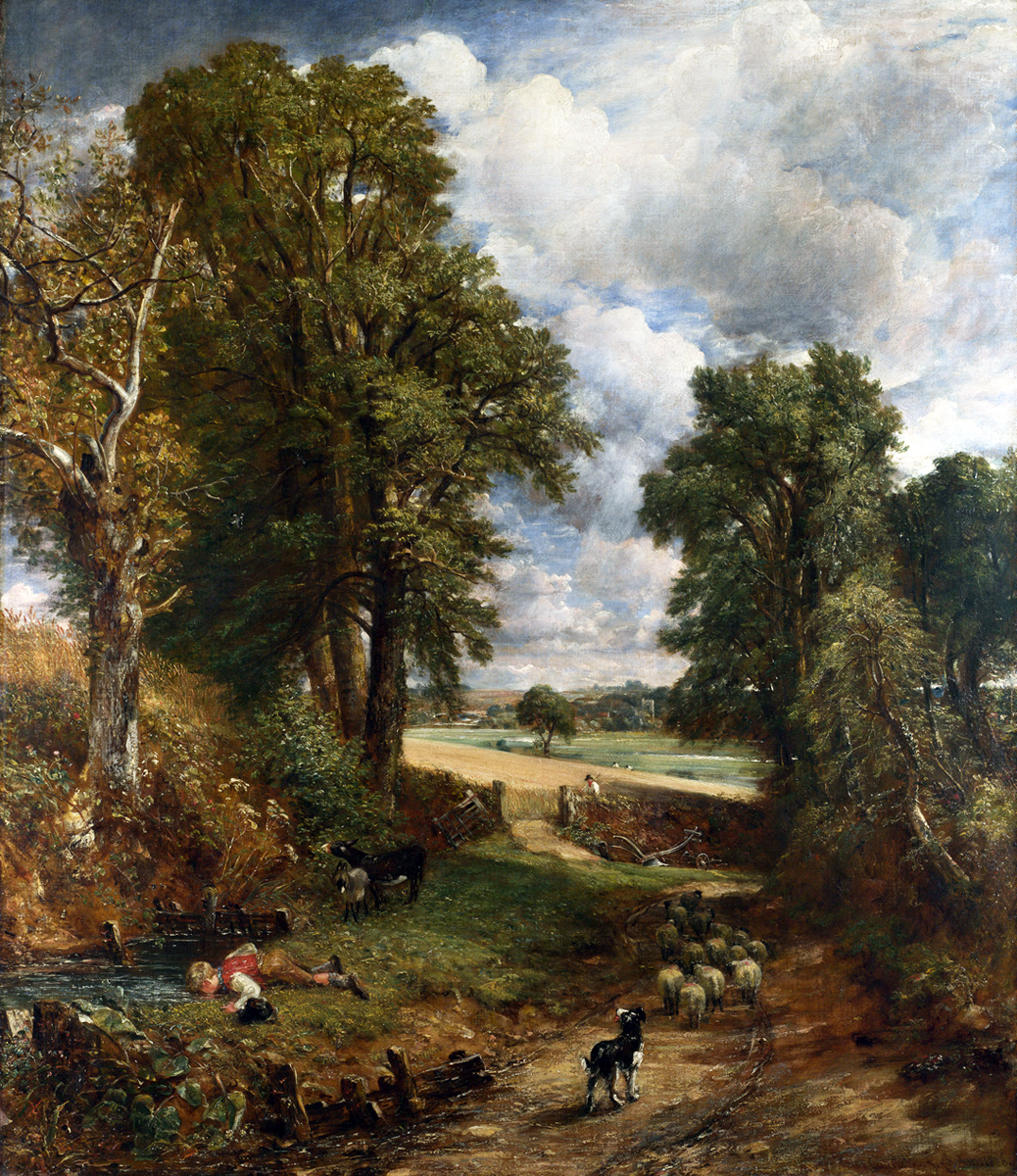
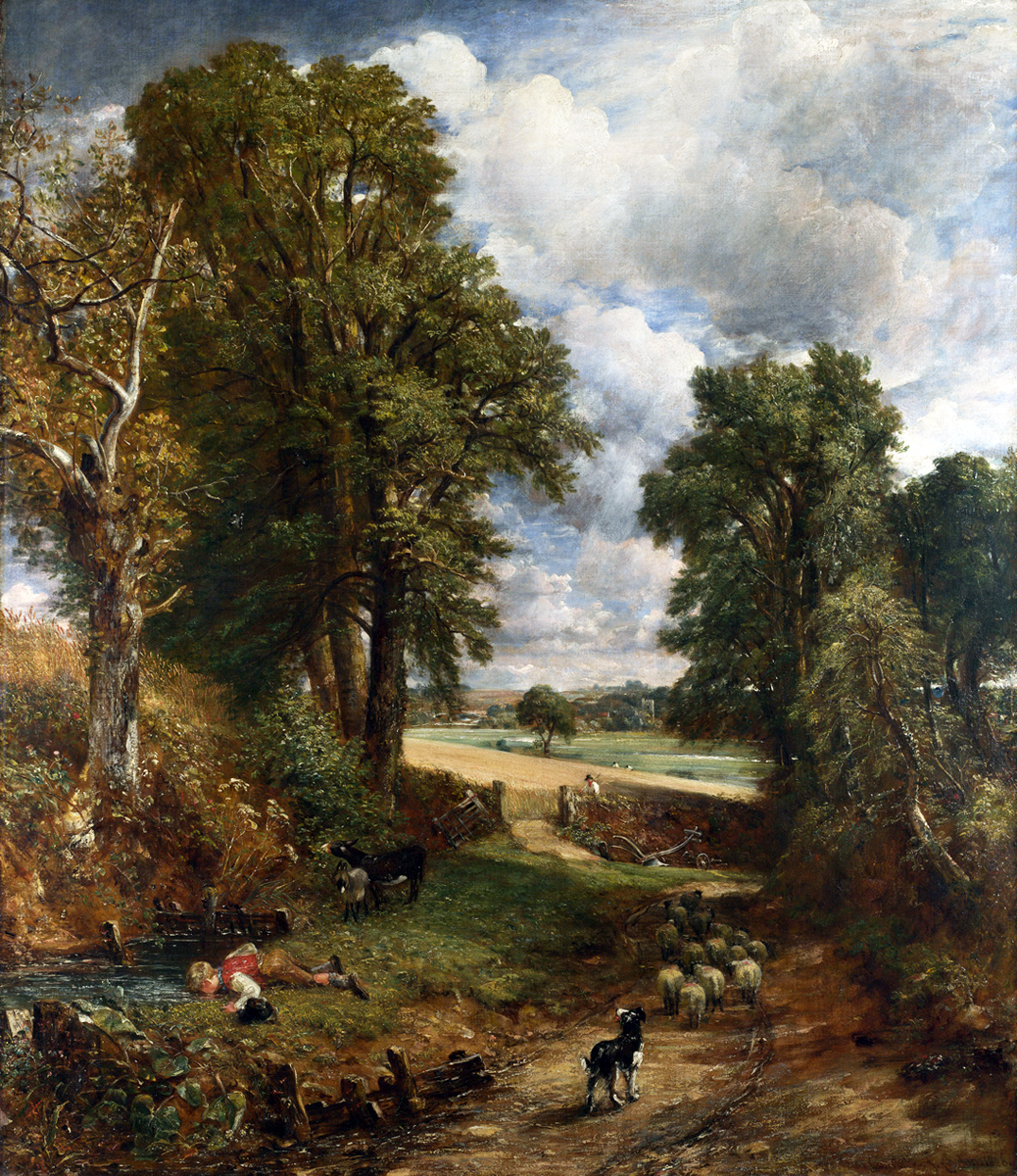
As one looks at The Cornfield, which Constable commonly referred to as “The Drinking Boy,” one can imagine themself as the little child taking a drink from the cool stream. 1
John Constable (1776-1837) is considered one of the finest English landscape artists, along with J.M.W. Turner. While many artists of his day traveled throughout Europe to find the most beautiful scenery, Constable never left England. He is best known for his landscapes of the countryside around his boyhood home in Suffolk County. He developed a unique style which combined objective studies of nature with his personal love of the countryside.
2
MUSIC APPRECIATION
“Rhapsody in Blue” by George Gershwin
“Rhapsody in Blue” stands out as one of the great symphonic contributions of 20th century classical music, certifying its author’s place in the history books as one of the most celebrated American composers of his era.
3
George Gershwin (1898-1937) was one of the most significant and popular American composers of all time. He wrote primarily for the Broadway musical theatre, but important as well are his orchestral and piano compositions in which he blended, in varying degrees, the techniques and forms of classical music with the stylistic nuances and techniques of popular music and jazz.4
- Lange, Krista, and Leigh Lowe. First Grade Enrichment: Classical Core Curriculum. Teacher Guide. Memoria Press, 2017. ↩︎
- Ibid. ↩︎
- Linton, Siena, and Classic FM. “Rhapsody in Blue: How Gershwin’s Hastily Composed ‘Jazz Concerto’ Became His Greatest Masterpiece.” Classic FM, Classic FM, 12 Feb. 2024, http://www.classicfm.com/composers/gershwin/how-wrote-rhapsody-in-blue-history/. ↩︎
- “George Gershwin.” Encyclopædia Britannica, Encyclopædia Britannica, inc., 21 Oct. 2024, http://www.britannica.com/biography/George-Gershwin. ↩︎
 Providence School of Tifton