
“Perhaps it is sufficiently demonstrated that such heathen learning is not unprofitable for the soul; I shall then discuss next the extent to which one may pursue it… For just as bees know how to extract honey from flowers, which to men are agreeable only for their fragrance and color, even so here also those who look for something more than pleasure and enjoyment in such writers may derive profit for their souls. Now, then, altogether after the manner of bees must we use these writings, for the bees do not visit all the flowers without discrimination, nor indeed do they seek to carry away entire those upon which they light, but rather, having taken so much as is adapted to their needs, they let the rest go. So we, if wise, shall take from heathen books whatever befits us and is allied to the truth, and shall pass over the rest. And just as in culling roses we avoid the thorns, from such writings as these we will gather everything useful, and guard against the noxious. So, from the very beginning, we must examine each of their teachings, to harmonize it with our
ultimate purpose, according to the Doric proverb, ‘testing each stone by the measuring-line.’”
― St. Basil, Address to Young Men on the Right Use of Greek Literature
ACTS 17:22-31
22 So Paul, standing in the midst of the Areopagus, said: “Men of Athens, I perceive that in every way you are very religious. 23 For as I passed along and observed the objects of your worship, I found also an altar with this inscription: ‘To the unknown god.’ What therefore you worship as unknown, this I proclaim to you. 24 The God who made the world and everything in it, being Lord of heaven and earth, does not live in temples made by man, 25 nor is he served by human hands, as though he needed anything, since he himself gives to all mankind life and breath and everything. 26 And he made from one man every nation of mankind to live on all the face of the earth, having determined allotted periods and the boundaries of their dwelling place, 27 that they should seek God, and perhaps feel their way toward him and find him. Yet he is actually not far from each one of us, 28 for “‘In him we live and move and have our being’; as even some of your own poets have said, “‘For we are indeed his offspring.’ 29 Being then God’s offspring, we ought not to think that the divine being is like gold or silver or stone, an image formed by the art and imagination of man. 30 The times of ignorance God overlooked, but now he commands all people everywhere to repent, 31 because he has fixed a day on which he will judge the world in righteousness by a man whom he has appointed; and of this he has given assurance to all by raising him from the dead.”
ST. FRANCIS’S PRAYER OF DESIRE
Therefore, let us desire nothing else, let us want nothing else, let nothing else please us and cause us delight except you our Creator, Redeemer and Savior, the only true God, Who is the fullness of good, all good, every good, the true and supreme good, Who alone is good, merciful, gentle, delightful, and sweet, Who alone is holy, just, true, holy, and upright, Who alone is kind, innocent, clean, from Whom, through Whom and in Whom is all pardon, all grace, all glory of all penitents and just ones, of all the blessed rejoicing together in heaven. Amen.
ART APPRECIATION
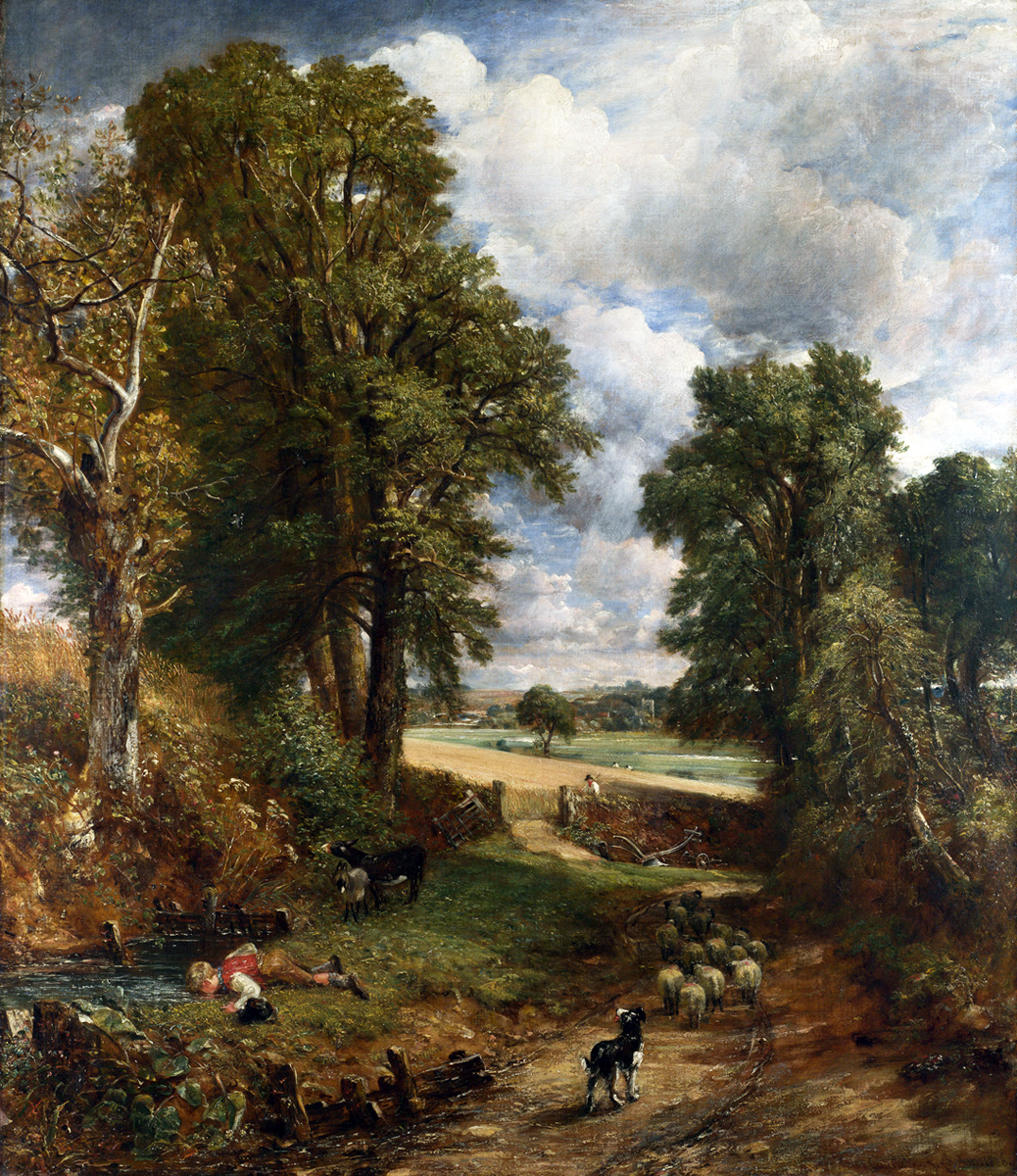
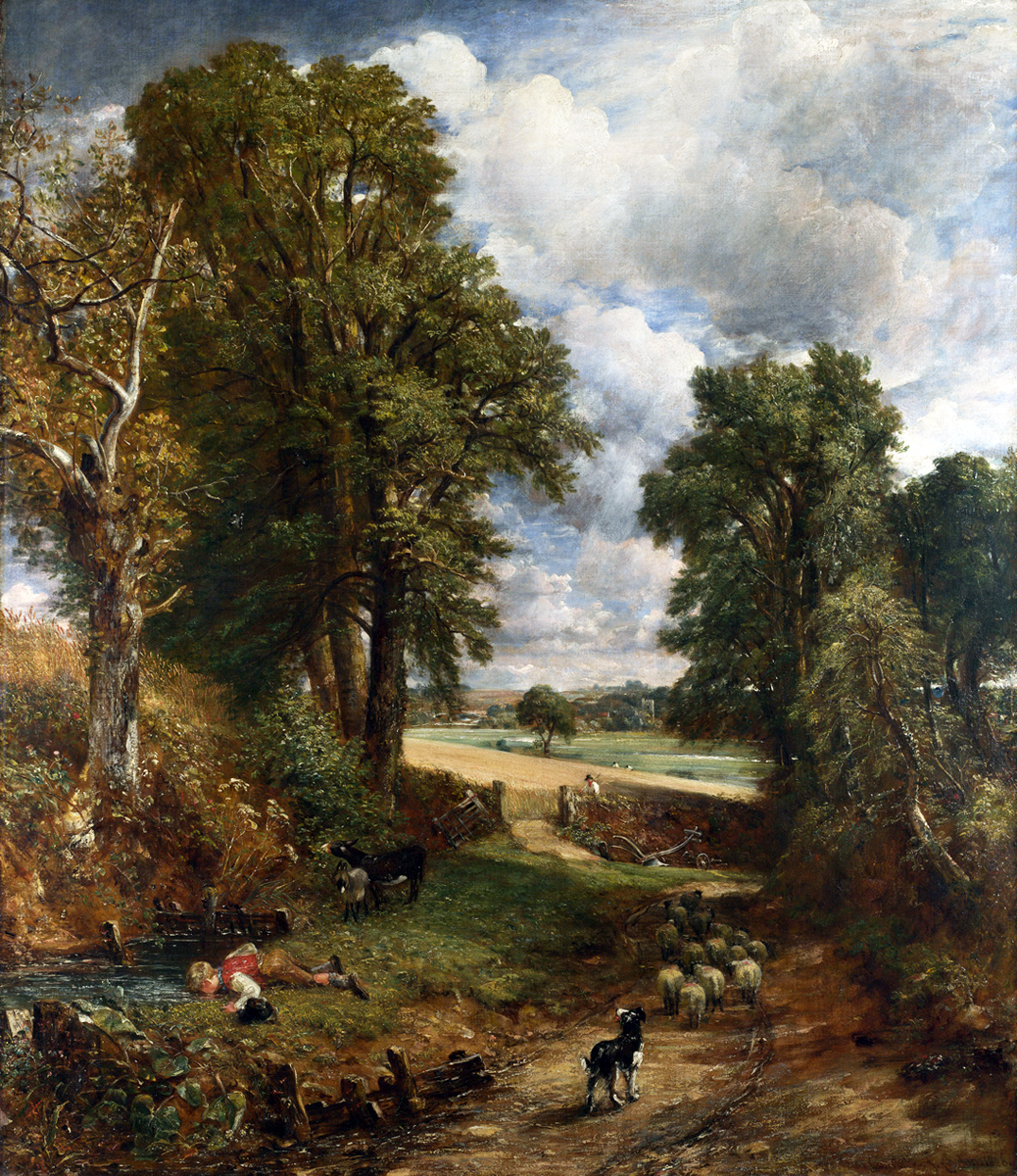
As one looks at The Cornfield, which Constable commonly referred to as “The Drinking Boy,” one can imagine themself as the little child taking a drink from the cool stream. 1
John Constable (1776-1837) is considered one of the finest English landscape artists, along with J.M.W. Turner. While many artists of his day traveled throughout Europe to find the most beautiful scenery, Constable never left England. He is best known for his landscapes of the countryside around his boyhood home in Suffolk County. He developed a unique style which combined objective studies of nature with his personal love of the countryside.
2
MUSIC APPRECIATION
“Rhapsody in Blue” by George Gershwin
“Rhapsody in Blue” stands out as one of the great symphonic contributions of 20th century classical music, certifying its author’s place in the history books as one of the most celebrated American composers of his era.
3
George Gershwin (1898-1937) was one of the most significant and popular American composers of all time. He wrote primarily for the Broadway musical theatre, but important as well are his orchestral and piano compositions in which he blended, in varying degrees, the techniques and forms of classical music with the stylistic nuances and techniques of popular music and jazz.4
- Lange, Krista, and Leigh Lowe. First Grade Enrichment: Classical Core Curriculum. Teacher Guide. Memoria Press, 2017. ↩︎
- Ibid. ↩︎
- Linton, Siena, and Classic FM. “Rhapsody in Blue: How Gershwin’s Hastily Composed ‘Jazz Concerto’ Became His Greatest Masterpiece.” Classic FM, Classic FM, 12 Feb. 2024, http://www.classicfm.com/composers/gershwin/how-wrote-rhapsody-in-blue-history/. ↩︎
- “George Gershwin.” Encyclopædia Britannica, Encyclopædia Britannica, inc., 21 Oct. 2024, http://www.britannica.com/biography/George-Gershwin. ↩︎
 Providence School of Tifton